
Fit, Comfort & Real Use
How Should a Cycling Jersey Fit?
Four principles for evaluating cycling apparel fit — on the bike, in motion, over time.
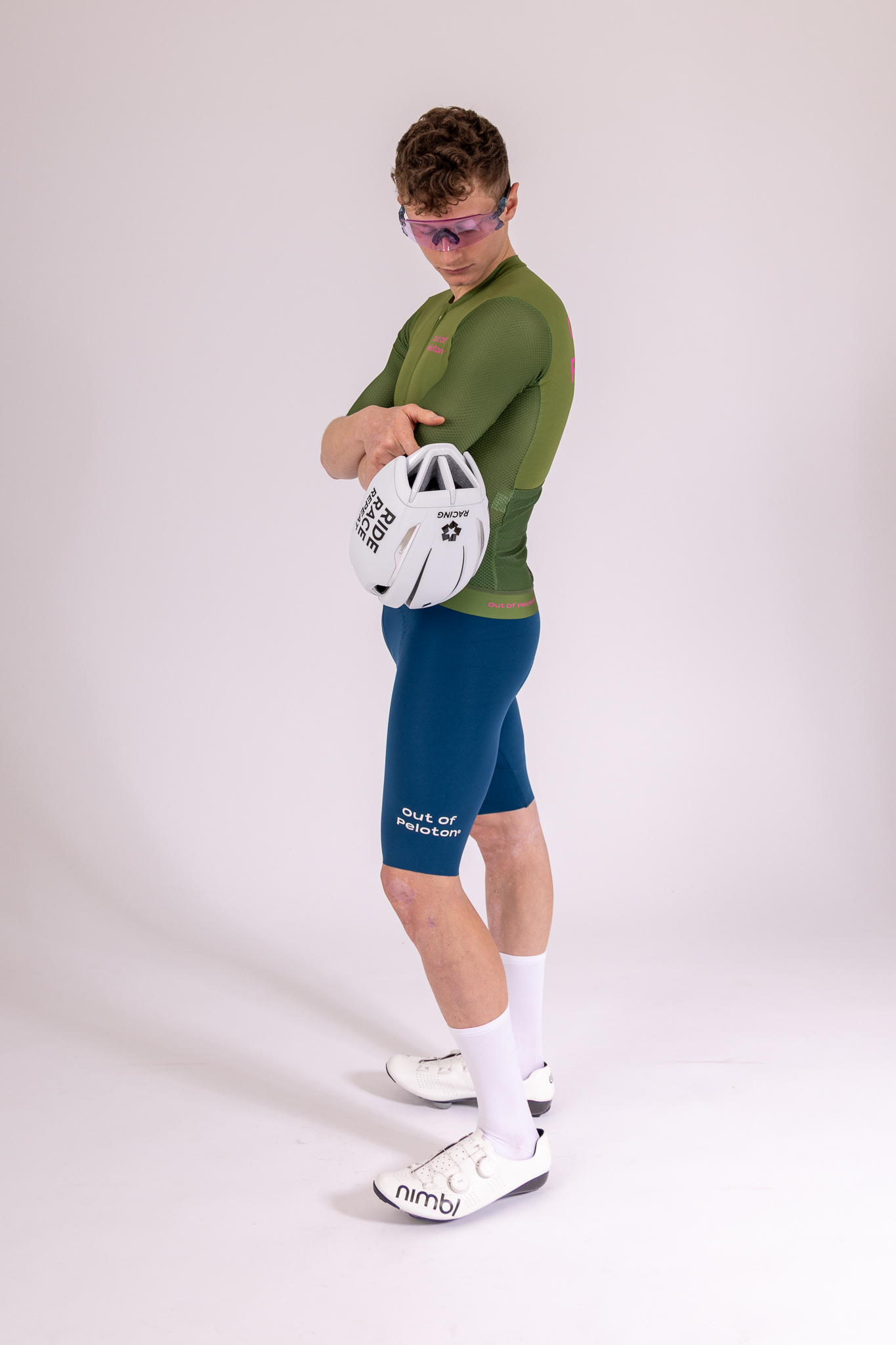
Fit is often judged standing still, in front of a mirror. But cycling apparel was never built for that position. A cycling jersey is conceived around the forward lean of the torso, the rotation of the shoulders, the rhythm of breath under sustained effort. What feels strange when upright often feels precise once seated on the bike.
Understanding how a cycling jersey should fit begins not with measurements, but with motion.
01The Jersey Is Built for the Riding Position
When you settle into riding position, the body changes shape. The spine extends forward. The shoulders narrow. The front of the torso shortens while the back lengthens. A well-built cycling jersey anticipates all of this.
The front panel sits slightly shorter. The back provides extended coverage where the spine reaches. The sleeves align with the natural forward reach of the arms. Standing upright, the proportions can appear unconventional — the hem looks uneven, the sleeves look long, the back feels generous.
On the bike, they make sense. The hem aligns. The sleeves reach the wrists naturally. The back covers without bunching.
Fit, in cycling, is not about how the garment looks when still. It is about how it behaves when the body is in its working geometry.
02Stability, Not Softness
Comfort is often confused with looseness. In cycling, it is the opposite.
A jersey that fits properly stays in place during effort. It does not flap in crosswinds. It does not shift when the rider stands out of the saddle on a climb. The rear pockets remain supported, holding their contents without sagging under load.
Excess fabric feels forgiving at first. Over time it becomes noise — small distractions that accumulate over hours of riding. A loose jersey pulls at the shoulders, bunches at the waist, rides up on descents.
A performance-oriented cycling jersey fit sits closer to the body, reducing unnecessary movement. It improves aerodynamics — yes — but more importantly it reduces friction between the rider and the garment.
The ideal jersey feels integrated. Not tight. Not loose. Simply present in the right way.
03Fit Changes Across Hours
A cycling jersey that fits perfectly at kilometer zero is not the same as one that fits perfectly at kilometer sixty.
Over hours of riding, the body changes. Muscles warm and expand. Skin temperature rises. Sweat alters the relationship between fabric and skin. A jersey that felt correct in the first minutes may feel different by the second hour.
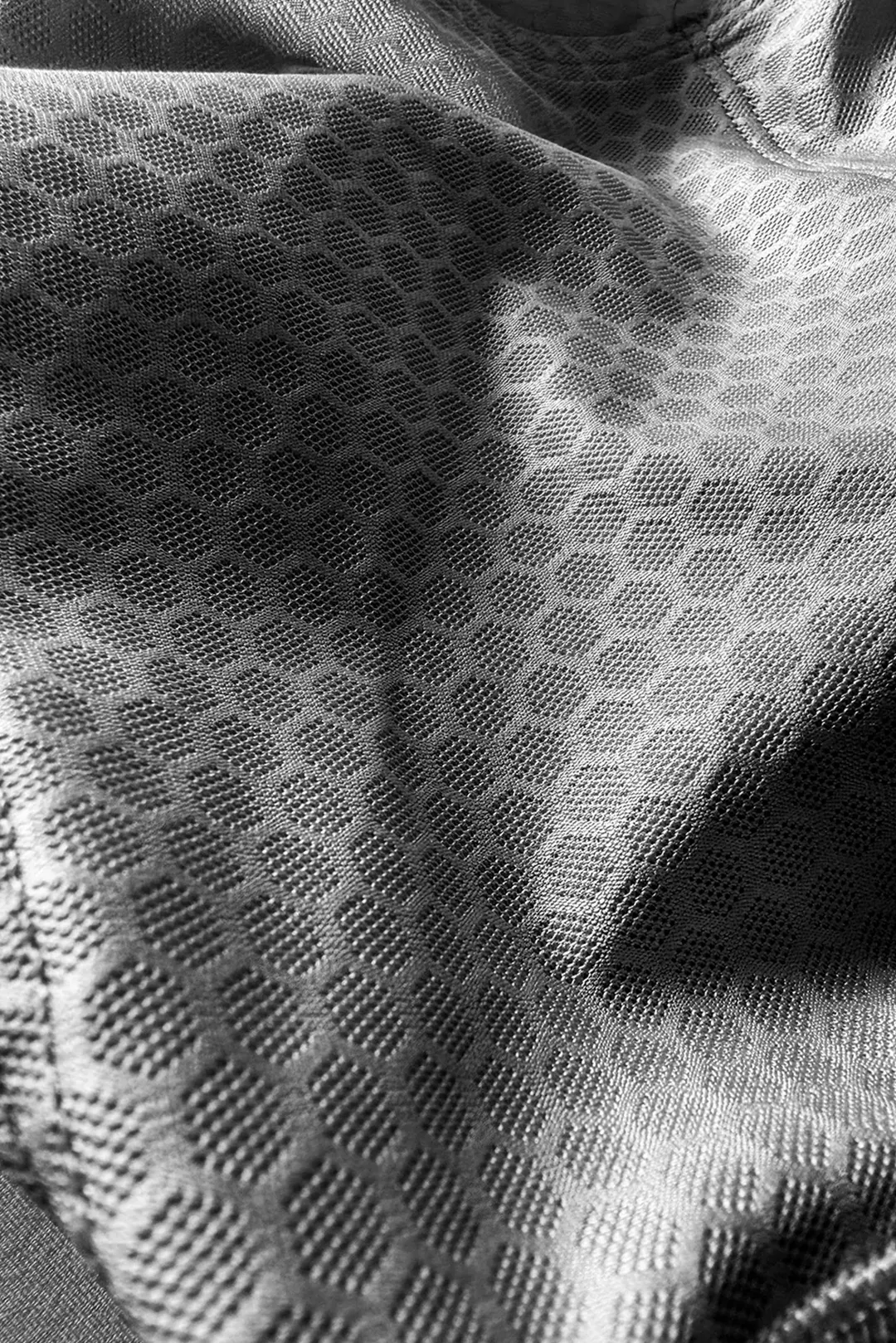
This is where construction quality reveals itself. Technical fabrics maintain their dimensional stability — they stretch under effort but return to shape, they manage moisture without becoming heavy, they hold their cut after dozens of washes. Lower-grade materials do the opposite: they relax, sag, lose their original geometry.
The right test for a cycling jersey is not how it fits at the start. It is how it fits when the ride is no longer easy.
Performance is not measured in the first hour. Neither is fit.
04The Garment Should Disappear
The best cycling apparel reaches a point where the rider stops noticing it.
You are no longer adjusting the hem. You are not aware of the seams at the shoulders. The fabric moves with the body rather than against it. The pockets, the zipper, the collar — none of them require attention.

This is what a correct fit achieves. It creates continuity between body and garment. And when that continuity exists, effort feels cleaner. The mind is free for the road, not for the kit.
A cycling jersey should never dominate the ride. It should support it — almost invisibly.
Choosing Your Fit
Different riders have different bodies and different intents. The fit that disappears for one rider may not disappear for another.
Out Of Peloton® offers a range of fit silhouettes across its five lines — from the relaxed gravel construction of Inertia to the hyper-slim aerodynamic cut of ICON. The differences are not aesthetic. Each silhouette is calibrated to a specific riding intent and rider profile.
The Out Of Peloton® Size Guide details measurements and recommended use for each line. Use it not as a table of numbers, but as a map of intent.
Find the line that matches the way you ride. Then find the size that lets the jersey disappear.
Frequently Asked Questions
How Should a Cycling Jersey Fit — FAQ
How should a cycling jersey fit on the bike?
A cycling jersey should fit closely without restricting motion. On the bike, the front sits flat against the torso, the back covers the spine without pulling, and the sleeves reach the wrists naturally in riding position. Standing upright, the proportions may look unconventional — the hem shorter at the front, the back longer — but these are correct when seated.
Should a cycling jersey be tight or loose?
A performance cycling jersey should be close-fitting but not constrictive. Excess fabric flaps in wind and shifts during climbs, becoming a source of friction over hours of riding. A jersey that sits stably against the body without restricting breath or movement is fitting correctly.
How do I know if my cycling jersey is the right size?
The right size for a cycling jersey is one that disappears during the ride — no adjusting, no bunching, no shifting. It should feel stable after one hour of effort, not just in the first minutes. If you stop noticing the garment after twenty minutes of riding, the fit is correct.